Top 5 Benefits of Home Nursing Care for Seniors in Lagos (2026 Guide)
As the demand for quality elderly care rises in Lagos, more families are choosing home nursing care services as a reliable alternative to hospitals and nursing homes.
By Richard O | Published on May 1, 2026 · 3 min readRead more▶
Compassionate Care Right at Home
As the demand for quality elderly care rises in Lagos, more families are choosing
home nursing care services
as a reliable alternative to hospitals and nursing homes. With the fast-paced
lifestyle in Nigeria’s commercial hub, ensuring your elderly loved ones receive
proper care without disrupting their comfort has become a priority.
In this guide, we break down the
top 5 benefits of home nursing care for seniors
in Lagos
and why it might be the best decision for your family.
1. Personalized Care Tailored to Individual Needs
Home nursing care offers customized healthcare solutions designed specifically for each senior. Professional caregivers and licensed nurses develop care plans based on:
- Medical conditions
- Mobility level
- Dietary needs
- Daily routines
This one-on-one attention ensures seniors receive
focused, high-quality care
, unlike in crowded hospitals.
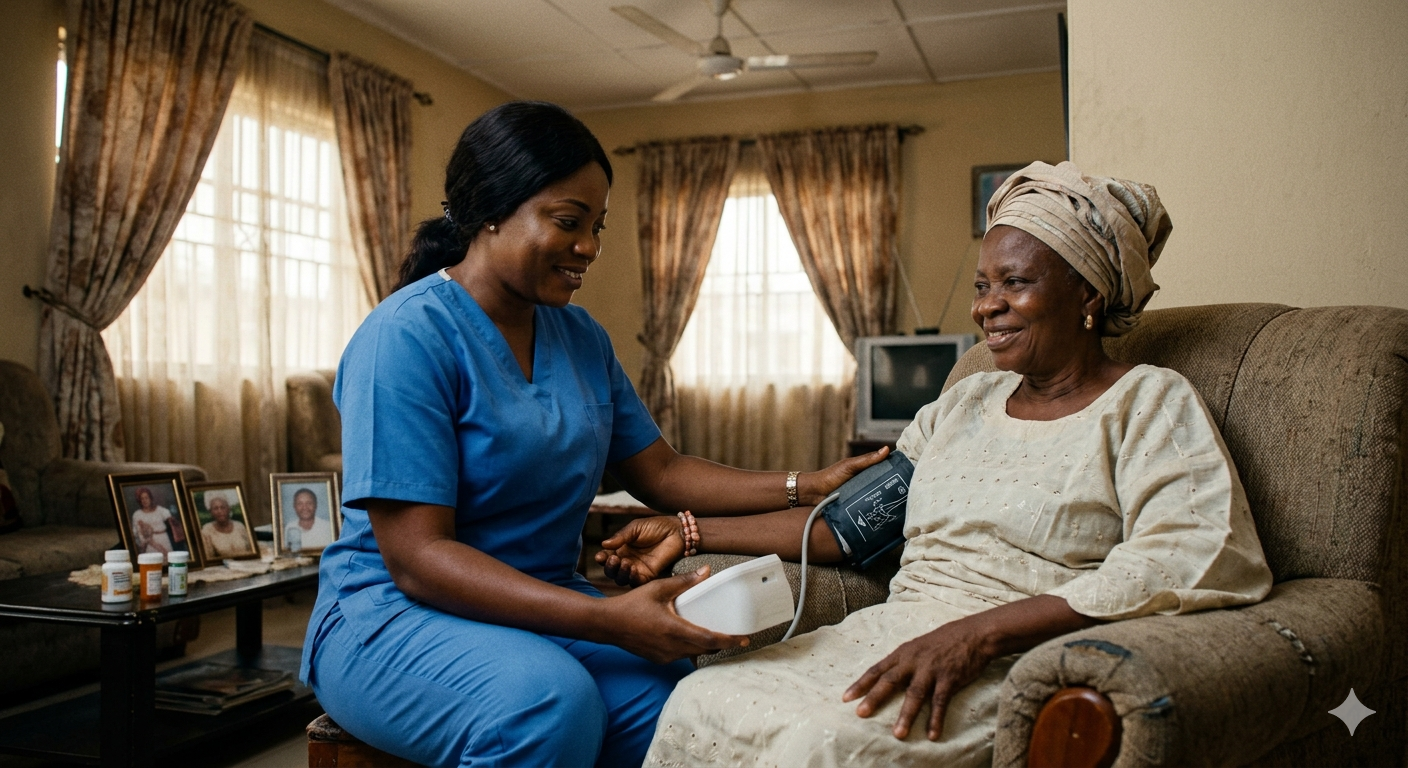
One of the most significant advantages of home nursing is the ability for seniors
to age in place. In Nigeria, there is often a strong sociocultural resistance
to institutional care, such as nursing homes, as many seniors prefer the dignity
and comfort of their own residences (Adetunji & Gumede, 2024).
Professional home care provides a person-centered approach, ensuring that medical
routines and daily activities are tailored specifically to the individual's
history and preferences.
2. Comfort and Familiar Environment
For many seniors, staying at home provides emotional stability and peace of mind. Familiar surroundings can:
- Reduce anxiety and confusion
- Support memory retention (especially for dementia patients)
- Improve overall mental health
In a city like Lagos—known for traffic and long hospital wait times—home care
eliminates unnecessary stress from frequent hospital visits.
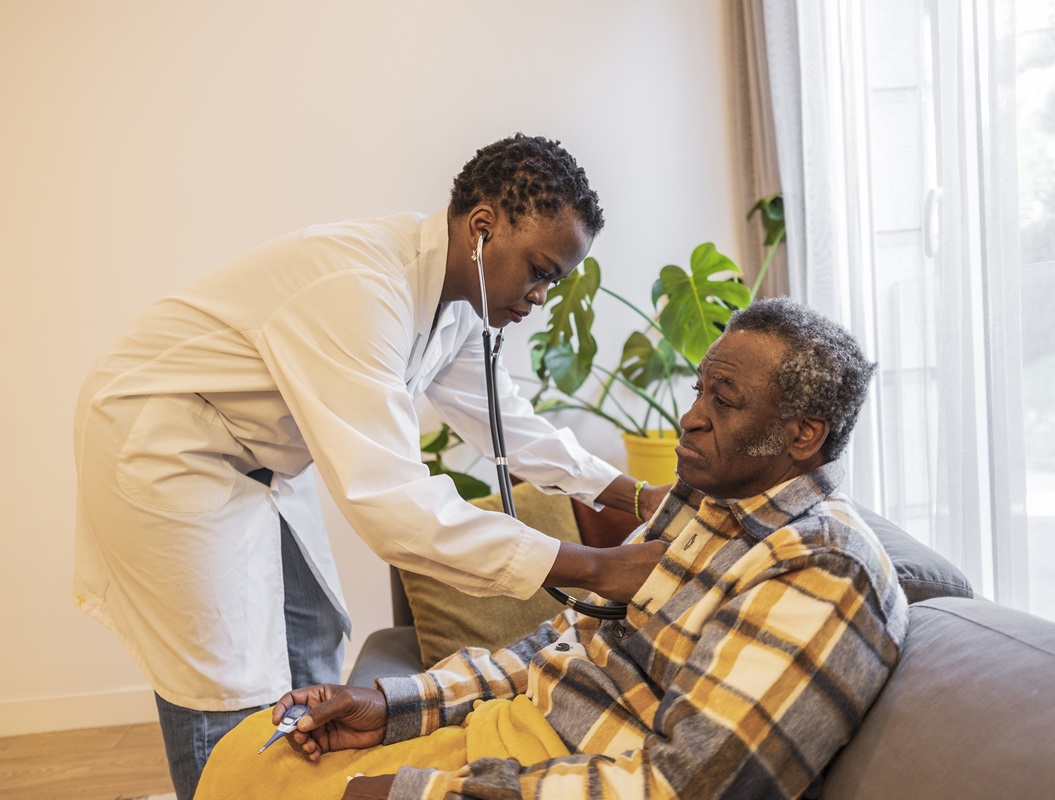
For seniors with chronic conditions, frequent trips to busy Lagos hospitals can be exhausting and risky. Home nursing minimizes exposure to infectious environments. By receiving professional medical monitoring—such as wound care, injections, or vitals management—at home, seniors are less likely to encounter the secondary infections common in crowded clinical settings.
3. Cost-Effective Compared to Hospital Stays
Many families assume home care is expensive, but in reality, it can be
more affordable
than long-term hospitalization
.
With home nursing services, you can choose flexible options such as:
- Hourly care
- Daily visits
- 24/7 live-in nursing
This flexibility helps families control costs while still ensuring quality care.
4. Increased Family Involvement and Peace of Mind
Home care allows families to stay actively involved in their loved one’s well-being. You can:
- Monitor care in real time
- Communicate directly with the nurse
- Provide emotional support
This transparency builds trust and ensures your loved one is treated with dignity and respect.
5. Lower Risk of Infections and Hospital Readmissions
Hospitals often expose seniors to infections due to shared spaces and high patient volume. Home nursing care significantly reduces this risk.
Benefits include:
- Controlled, hygienic environment
- Reduced exposure to contagious illnesses
- Better recovery rates at home
Why Home Nursing Care is in High Demand in Lagos
The rise in home healthcare services across Lagos is driven by:
- Busy urban lifestyles
- Increased awareness of elderly care options
- Preference for convenience and privacy
- Growth of professional caregiving agencies
Conclusion
Home nursing care is more than just a convenience—it’s a
life-enhancing solution
for seniors in Lagos. From personalized attention to reduced healthcare costs and improved emotional well-being, the benefits are undeniable.
If you’re looking for a way to provide your elderly loved ones with
safe,dignified
, and comfortable care, home nursing is one of the best
options available today. Our agency provides peace of mind services at Yomade Healthcare.